24/25 Annual Report- Projects and Financial Statement
Reflecting on the 24-25 Fiscal Year
Both the Lower Powder Strategic Implementation Area (SIA) and Burnt River SIA continue to gain traction in Baker County, with 14 restoration projects being implemented to date between the two boundary areas. Water sampling continues as part of the SIA projects as well, with Burnt River completing the first full season of sampling, while Lower Powder finished up the fourth. Samples are collected and tested for seven separate water quality parameters and are entered to show a trend over time. This data is then presented to ODA and DEQ on an annual basis, with the goal of showing ag water quality improvements in the Powder and Burnt River Basins.
To enhance this work, the Baker County SWCD’s applied for and received funding through an ODA Water Quality Grant to complete DNA monitoring on E.coli water samples throughout the basins. This information will become increasingly important for agriculture following Oregon DEQ and EPA’s adoption of the E. coli TMDL in the Powder River Basin earlier this year. SWCD staff aided local irrigation districts with creating a TMDL Implementation Plan, which are now required by DEQ, who designated irrigation districts as “responsible management agencies” under the TMDL. The SWCD has also worked with ODA in creating their TMDL Implementation Plan by organizing community meetings and providing feedback.
The Baker County SWCD’s continue to implement on the ground restoration work that promotes sustainable agriculture while improving water quality and protecting the Powder Basin and Burnt River Watersheds, with 18 open projects, and 25 more in monitoring status. This report is a snapshot of the 2024-2025 fiscal year for the Keating, Eagle Valley, Burnt River and Baker Valley Soil and Water Conservation Districts.
Regards,
Whitney Rohner, District Manager
Keating SWCD - At a Glance - July 2024 through June 2025
* BOARD OF DIRECTORS
● Zone 1: John Wirth, Secretary/Treasurer
● Zone 2: Eric Porter
● Zone 3: Curt Nelson, Vice Chair
● At Large 1: Scott Wilde
● At Large 2: Skyler Martin, Chair
● Associate Director: Holly McKim
* PROFIT AND LOSS
●Beginning Balance: $36,336
●Funds Received: $827,072
●Funds Expensed: $796,442
●Ending Balance: $66,966
* OPEN GRANTS
●Lower Powder SIA – Large Grant
This Strategic Implementation Area (SIA) was established in 2018 and takes place within the Maiden Gulch, Five Mile Creek, Balm Creek and Goose Creek drainages together containing 75,415 acres and tributary streams to the Powder River. The Powder River, historically used as a conveyance system to Eagle Creek by bull trout currently accommodates a variety of species including red band and rainbow trout. The Powder River is listed on the Oregon Department of Environmental Quality 303 (d) list for ammonia, algae, arsenic, dissolved oxygen, flow modification, habitat modification, nutrients, pH and sedimentation. Through the successful funding of this SIA the Keating SWCD will coordinate technical assistance partnerships, implement landowner outreach strategies, conduct monitoring and help landowners to implement projects for the improvement of water quality. Water sampling data is presented to the Keating Board, ODA and Oregon DEQ on an annual basis.
●Clover Creek Irrigation (Phase 1 and 2) – Large Grant
This two-phase project, located in the SIA, will address ongoing water quality and water use efficiency concerns in Clover Creek, a direct tributary to the Powder River. Currently, 65 acres of agricultural farm ground is flood irrigated through a series of earthen ditches diverted out of Clover Creek, a perennial stream. Although it can be effective, flood irrigation at the project site contributes sediment, debris, and organic matter directly into Clover Creek, negatively impacting water quality. To mitigate the water quality concerns and to improve on-farm irrigation efficiency, the Clover Creek Irrigation Round 2 project is proposing to install one center pivot irrigation system, eliminating flood irrigation and tailwater at the project site. This project is a continuation of large grant #220-5026, Clover Creek Irrigation, which was approved for funding in the fall of 2019. The landowner was ready to implement the project in 2020; however, with the rapidly rising costs of material and fuel, we soon discovered that the original project budget would not be sufficient to complete the project in its entirety. Round 2 will complete the project by installing the pivot with a flow meter, mainline, bubbler, and new steel head gate.
●Skinner Irrigation- Large Grant
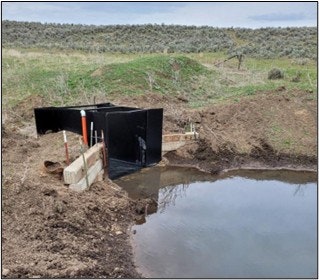
This project will address 66 acres of flood-irrigated pasture ground that is currently causing erosion and untreated runoff on uneven terrain. Sourced from Balm Creek, which is in the Lower Powder SIA focus area, an irrigation ditch transports water to the project site where it is then diverted into a series of earthen ditches to irrigate the property. As flood irrigation water is “pushed” across the field it collects sediment, debris, and material adding it back into Balm Creek and ultimately into the Powder River. The completion of this project will convert 66 acres from flood irrigation to sprinkler by installing one center pivot.
●Duncan Ditch Irrigation – Large Grant
This property utilizes flood irrigation water, diverted from the Powder River via the Duncan Ditch and Basche Ditch to irrigate 120 acres of pasture/hay ground. Flood irrigation at this site is found to be the least efficient manner of irrigation. When the ground is flooded, more water than is necessary for the vegetation, or that can be held by the soil is applied to the field, causing marshy saturated ground, increased erosion and runoff, and excess sediment inputs into the Powder River Watershed. Not only is this impacting water quality on this DEQ 303(d) listed stream, but the current irrigation practices are flooding the neighboring property, misusing irrigation water. The Duncan Ditch Irrigation Project proposes to convert from flood to two center pivots with two pumping stations (one on the Basche Ditch and one on the Duncan Ditch) to irrigate 120 acres of pasture ground more efficiently; two pumping stations are necessary due to the Basche Ditch being unable to handle the additional water flow on its own. This project is also located within the SIA boundary.
●Bull Pasture Spring Development- Small Grant
This small grant, located within the Lower Powder SIA, developed a spring on site, capturing water for two new off-channel watering troughs as well as one buried storage tank; the developed spring was fenced for protection. Also occurring at the project site in Pasture B; the only source of stock water was via irrigation runoff that travels through the pasture, eventually leaving the property with additional sediment, debris, and organic material, emptying into Balm Creek. This posed a water quality issue in the watershed; Balm Creek is one of four drainages currently being monitored under the Lower Powder SIA. The newly installed off-channel watering system will alleviate these water quality concerns at the project site as well as downstream.
●Ruckles Creek Stockwater – Small Grant
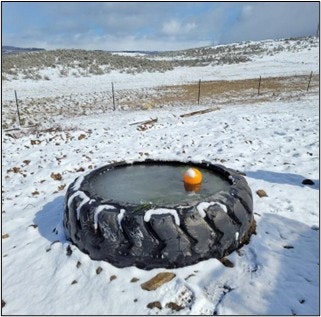
At the project site, an unnamed seasonal drainage that travels through Pasture 1 (160 acres) provides the only source of water available for livestock; Pasture 2 (an additional 30 acres) has no water source, making it impossible to implement successful rotational grazing at the site. Livestock tend to congregate around water sources, increasing pressure along banks and contributing to sedimentation, erosion, and nutrient inputs that can travel downstream and into the Powder River. By installing two off-stream watering systems (one in each pasture) the landowner will be able to better utilize rotational grazing. As part of the project, an electric fence will be installed along the drainage when water is present; this will help protect the banks and prevent future erosion and sedimentation concerns in the watershed. This project is within the SIA, and the landowner is also partnering with NRCS.
●Slough Two Trough – Small Grant
This project site is adjacent to the Powder River and falls within the Lower Powder SIA boundary. Currently, the only watering source in this 105 acre pasture is an open slough, leaving little option for clean, reliable stock water or rotational grazing management. The slough is becoming trampled, causing erosion, sedimentation, and nutrient input concerns in the Powder River Watershed. This project proposes to install a solar powered pump system in the open slough, capturing water for two new off-channel watering troughs, as well as one new buried storage tank; the open slough will be fenced to protect from further trampling and soil erosion. The landowner will install cross fencing to divide the large pasture into two separate pieces; one 70-acre and one 35-acre pasture will each hold a rubber tire watering trough.
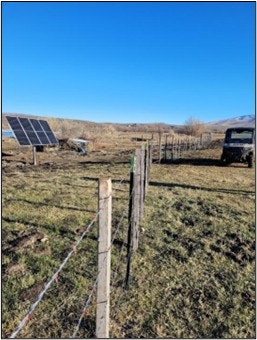
●Field 12 Irrigation Project – Large Grant
Also located within the SIA, this property utilizes flood irrigation water, diverted from the Powder River via the Duncan Ditch to irrigate 42 acres of pasture/hay ground, all of which is surrounded by the Powder River; currently, all flood tailwater leaves the property and runs directly back into the Powder. Flood irrigation at this site is found to be the least efficient manner of irrigation, and tailwater is contributing to excess sedimentation and nutrient input concerns in this Oregon DEQ 303 d listed stream. The Field 12 Irrigation Project proposes to convert from the use of flood irrigation to a center pivot with one pumping station on the Duncan Ditch to irrigate 42 acres of pasture/hay ground more efficiently, and to eliminate flood runoff into the Powder River.
MONITORING GRANTS
●Restoring the Powder (Phases 1 and 2) – Large Grants
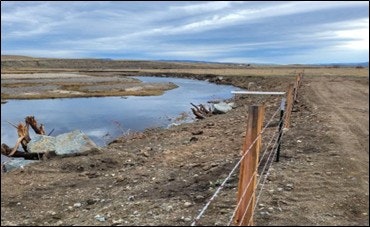
The Restoring the Powder project, which turned into a two-phase implementation process, addressed severe erosion, bank cutting and de-vegetation along 1,400 feet of the lower Powder River. LiDAR data suggests that there had been significant bank movement; approximately 15 feet within the last several years. This made it difficult for the landowner to establish large riparian vegetation which would provide the long term bank stability needed. To combat bank loss, erosion and sedimentation at the site, engineered bank revetments were installed within two identified priority areas; one 500 foot section, and one 900 foot section. Idaho Power Company, using Snake River Stewardship Program funding, partnered on this large grant to install 11,466 feet of wildlife friendly fencing along both sides of the Powder River within this property; both sides include a minimum 40 foot buffer from the river. The riparian fence includes two water gaps for livestock access, reinforced with gravel and rock to limit future impacts to the stream. The revetments consist of strategically placed materials that include:
▪ 100 large rocks
▪ 400 cubic yards of rock/fill
▪ 16 root wads
▪ 77 whole trees
▪ 4 logs
▪ 500 five-foot willow whips

Eagle Valley SWCD- At a Glance - July 2024 through June 2025
* BOARD OF DIRECTORS
● Zone 1: Tom Smit
● Zone 2: Kyle Ransom, Secretary/ Treasurer
● Zone 3: Rick Jackson, Chair
● At Large: 1 Ron Still, Vice Chair
● At Large 2: Deven Thompson
● Associate Director: Mike Marlow
* PROFIT AND LOSS
●Beginning Balance: $94,915
●Funds Received: $763,047
●Funds Expensed: $783,554
●Ending Balance: $74,408
* OPEN GRANTS
●Boulder Flat Irrigation Phase I- Large Grant
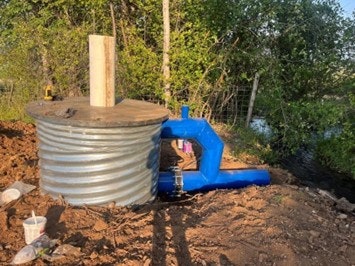
Located five miles north of Halfway, The project site is situated between Pine and Clear Creek and represents a high-priority area for bull trout recovery actions in Pine Creek Basin; specifically for water quality and fish habitat improvements. The project site currently hosts flood irrigation practices on 249 acres of pasture/hay ground. The Phase I proposed project will convert 81 acres from flood to a more efficient sprinkler irrigation method by installing two center pivots, one new “community” headbox, two off-channel watering troughs, and 8,500 feet of pipe to convert from an open earthen ditch to a closed pipe system. The landowner has already applied for funding for part of this project through Idaho Power’s Pine Creek Water Efficiency Program.
●Halfway Habitat Restoration- Large Grant
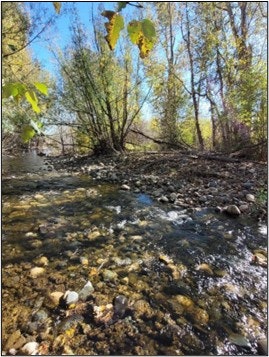
The Halfway Habitat Restoration project is a continuation of work that began under the recently completed Technical Assistance Grant #222-5042 Halfway to Fix Fish Habitat. Through the TA we have obtained all required permits, as well as received a 90% construction-ready design to address the bank erosion, sedimentation, degraded fish habitat, and loss of riparian vegetation concerns that the site continues to experience. This project will increase woody debris reactivate a side channel and lower the flood plain using strategically placed rootwads, logjams, whole trees and boulders. The banks will be planted and 1,200 feet of fencing will be installed to protect the new trees.
●Hawthorn Patch Spring Development- Small Grant
Located on 298 acres near Richland, this project is seeking to address water quality issues due to the lack of off-channel watering locations for livestock. Currently, the source of water available to livestock is an undeveloped spring and a perennial stream that runs through the landowner’s property, which is experiencing erosion and bank sloughing. The landowner will develop a spring, install two 600-gallon water troughs, and install 700 ft. of HDPE pipe to reduce livestock pressure on the perennial stream and provide reliable water.
● Oliver Irrigation Improvement- Small Grant
Located near East Pine Cree, this property is currently flood-irrigating nine acres of pasture/hay ground via an open earthen ditch. The water is diverted out of Spring Creek into the Oliver Ditch and pushed across the property; all flood irrigated tailwater empties into East Pine Creek, an Oregon DEQ 303 d list stream. The landowner will convert from flood to sprinkler irrigation under one wheel line and one big gun, serving the nine acre pasture using less water and addressing flood irrigation runoff concerns.
● Buchanan Loop Irrigation Round 2- Small Grant
Located near East Pine Creek, this property is currently flood-irrigating nine acres of pasture/hay ground via an open earthen ditch. The water is diverted out of Dry Creek into an open earthen ditch and pushed across the property. The landowner has partnered with the Eagle Valley SWCD to convert from flood to gated pipe, better serving the nine acre pasture, using less water, and addressing flood irrigation runoff at the site.
● Slaughterhouse Irrigation Improvement- Small Grant
East Pine Creek runs through the project site, which is currently flood irrigating nine acres of pasture/hay ground via Clear Creek. The landowner will convert from flood to wheel line irrigation and install 1,400 feet of 4” mainline with risers to service a wheel line, as well as a new pump, complete with flow meter.
●The Dooryard Project– Large Grant
Located five miles northwest of Halfway; the goal of this project is to improve irrigation water efficiency, water quality, and fish habitat conditions in Pine Creek by converting from flood to sprinklers on 70 acres of pasture/hay ground, thus eliminating flood water runoff concerns. Components include one three-tower pivot, four wheel lines, three big guns, two new headboxes, a floating pump, and conduit/mainline.
●Squaw Creek Spring Development – Small Grant
Located near Richland; currently this site’s only access to livestock water during fall and winter months is a single irrigation ditch. When not being used to irrigate, the landowner diverts water down the Tobin Ditch to provide livestock water to this pasture ground. This project will develop one spring and install one off-channel livestock watering tank, providing water to two separate pastures totaling 12 acres. Project activities will promote successful rotational grazing, decrease runoff and erosion, and improve water quality within the Powder River Watershed. The landowner will no longer need to divert water down the ditch during the non-irrigation season.
MONITORING GRANTS
●Tarter Slough Fish Passage - Large Grant
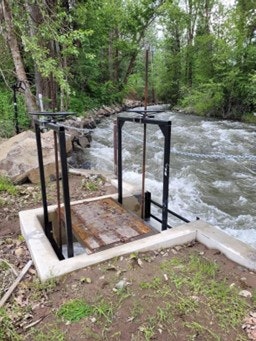
This project removed fish barriers on Pine Creek and replaced them with engineered boulder/rock riffles and a concrete head gate incorporating a low-flow fish passage. Rock riffle stones were embedded into the active channel improving upstream and downstream passage for fish. 380 feet of bank upstream from the diversion was restored using a rock revetment consisting of boulders stacked three to four feet high. Native fill along with willow cuttings was statically placed to ensure proper stabilization. 300 feet of bank downstream of the diversion incorporated logs jams and root wads in the bank to prevent erosion. A 15 CFS rotary drum fish screen was installed on Tarter Slough ditch to prevent fish entrainment in the ditch. A previous high-water event removed the existing diversion structure and scoured the stream channel dislodging debris upstream resulting in significant bank erosion.
●Nimbus Irrigation- Large Grant
This project installed two pivots on 100 acres pasture/hay ground. Restoring fish passage and addressing instream flows within the migratory corridors of the Pine Creek watershed is emphasized in the 2015 Mid-Columbia Recovery Unit Implementation Plan for bull trout. The water savings will be beneficial to the stretch of East Pine Creek which is part of a larger project.
●Two Circle Irrigation – Large Grant
The Two Circle Irrigation project improved water quantity by converting 85 acres of pasture/hay ground to sprinkler irrigation by installing two pivots; improved riparian health at the site by fencing Dry Creek with 6,800 feet of wildlife-friendly fence, thus eliminating trampling and degrading of the creek banks. Planted native scrubs along the banks to help restore critical streamside vegetation, aid in bank stabilization and reduce soil erosion.
●Oliver Sullivan Fish Passage – Large Grant
This project accomplished consolidating two Points of Diversion (POD; 10.2 cfs total) into one. The new POD included a steel intake structure, head gate, buried pipeline, and rotary drum fish screen. Two of the existing diversion structures was removed and replaced with large woody material and engineered riffle structures to pass native migratory fish, specifically Bull Trout. A total of five large wood material (LWM) structures were installed to provide instream habitat around each engineered riffle structure. 9 log/root wads in three structures were installed within the extents of the upper engineered riffle and three log/root wads and two log sweepers in two structures were installed within the extents of the lower engineered riffle. Instream habitat and riparian plantings were installed to improve banks.
●Middle Irrigation- Small Grant
This project addressed watershed and irrigation efficiency concerns on 14 acres of pasture/hay ground by installing 1,252 feet of 8” gated pipe and a new headbox at the existing diversion location.
●Pancake Irrigation- Small Grant
This project improved irrigation methods on 17 acres of pasture/hay ground by installing a new head gate to divert water down 700 feet of 8” gated pipe, better distributing irrigation water and reducing the chances of subbing at the site.
Burnt River SWCD- At a Glance- July 2024 through June 2025
* BOARD OF DIRECTORS
● Zone 1: David Nygard, Chair
● Zone 2: Diana Fillmore, Vice Chair
● Zone 3: Bryan Hardy
● At Large 1: Mark Fillmore
● At Large 2: Edward Sullivan, Secretary/Treasurer
* PROFIT AND LOSS
●Beginning Balance: $22,268
●Funds Received: $412,983
●Funds Expensed: $406,225
●Ending Balance: $29,026
*OPEN GRANTS
●Burnt River SIA – Large Grant
This Strategic Implementation Area (SIA) will take place within the South Fork of the Burnt River, Job Creek, and Camp Creek drainages, together containing 209,531 acres and an estimated 330 stream miles. This grant aims to coordinate technical assistance partnerships, implement landowner outreach, conduct stream monitoring, and help landowners implement projects for the improvement of water quality in these key watersheds.
●Main Meadow Irrigation – Large Grant
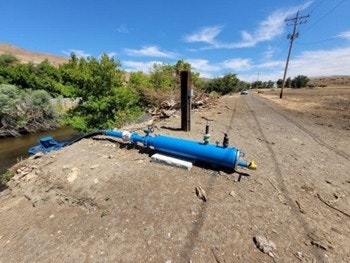
Outside of Huntington, this pasture ground is currently being flood irrigated with the banks of the Burnt River only a few feet away. The landowner will recover the ground under new sprinkler irrigation and plant alfalfa, as well as improve grazing management, thus decreasing runoff from directly entering the Burnt River. This project will install two pivots and two ODFW approved floating pumps in the Burnt River, pumping only the amount of water needed to irrigate the 60 acres under the two pivots.
●Hersh Gulch Spring Development – Small Grant
Near Huntington, the project site is adjacent to the Burnt River. Hersh Gulch, a seasonal drainage, is the only source of stock water available in two large pastures. Not only is the gulch an unreliable source of water, but it is located in steep, remote terrain and difficult to access in most places, making rotational grazing management difficult to implement. This project will develop two springs, one in each pasture, and install two off-channel watering systems to promote successful rotational grazing, decrease runoff and erosion, and improve water quality within the Burnt River Watershed. Other project components consist of two rubber tire troughs, 280 feet of 2” HDPE pipe and fencing to protect the newly developed springs.
●Lancaster Irrigation and Riparian Improvement – Large Grant
Near Unity, and in the newly established Burnt River SIA, this project will address riparian health as well as inefficient irrigation practices on 130 acres of flood and wheel line irrigated ground. Two pivots will be installed, as well as 5,780 feet of mainline to eliminate the use of the highly erodible open earthen Lancaster Ditch that has been contributing to soil erosion, sedimentation and ditch loss concerns at the site. As a part of this irrigation efficiency project, the landowner will install 4,500 feet of wildlife-friendly fence and one off-stream watering trough and water gaps to improve grazing management while protecting the banks of the South Fork.
●Town Gulch Re-Seeding – Small Grant
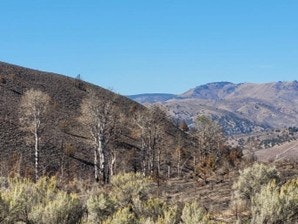
Near Bridgeport, this project will address re-vegetation, erosion and runoff concerns after the 2024 Durkee Fire burnt the entire Town Gulch pasture, spanning 1,788 acres. This project will aerially re-seed 400 acres of steep pasture ground with a native seed mix.
MONITORING GRANTS
●Gold Cliffs Spring Development – Small Grant
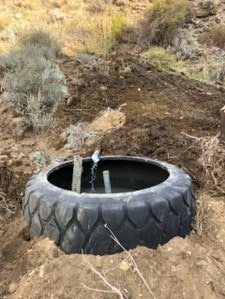
Near Durkee, in this 100 acre pasture the only water source for livestock and wildlife was a perennial stream that flows into Sisley Creek, a tributary to Burnt River. To improve grazing rotations and prevent runoff from entering the stream, a spring was developed using four inch collector pipe, 300 feet of HDPE pipe, and installing a rubber tire watering trough with escape ramp and on a rock base.
●Peach Orchard Spring Development- Small Grant
Near Durkee, this project accomplished the goals of improving water quality concerns in this pasture by developing a spring and installing an off-channel water trough for livestock and wildlife. Water is collected with a four-inch collector pipe, and 300 feet of 2-inch HDPE pipe was installed to convey the water. The trough has a wildlife escape ramp and has an overflow into natural drainage and was placed on a rock base for longevity.
Baker Valley SWCD- At a Glance- July 2024 through June 2025
* BOARD OF DIRECTORS
● Zone 1: Myron Miles, Vice Chair
● Zone 2: Deryl Leggett, Secretary/Treasurer
● Zone 3: Mike Williams
● Zone 4: Joel Rohner
● Zone 5: Dean Defrees, Chair
● At Large 1: Brent Thompson
● At Large 2: Tim Kerns
* PROFIT AND LOSS
●Beginning Balance: $141,690
●Funds Received: $749,611
●Funds Expensed: $756,614
●Ending Balance: $134,687
* OPEN GRANTS
●Palmer-Denham Irrigation- Large Grant
Located one mile from the Powder River, the site utilizes flood irrigation on 40 acres of pasture ground, conveyed via the 17th Street Ditch to the Palmer-Denham ditch, an open earthen ditch that stretches across and irrigates the property. Flood water runoff at the site is contributing to erosion concerns and water quality impacts to the Powder River, an Oregon Department of Environmental Quality (DEQ) 303(d) list stream. The project proposes installing 2,550 feet of mainline and one five tower pivot, converting 40 acres of flood irrigated pasture ground to a more efficient sprinkler irrigation system. With the new system in place, this section of the earthen Palmer-Denham Ditch will be decommissioned (as supported by the landowner and the Baker Valley Irrigation District) eliminating erosion and flood irrigation runoff concerns at the site entirely.
●Gentry Creek Water Improvement- Small Grant
Currently, one developed spring and one off-channel livestock watering trough serves 40 cow-calf pairs in this 470-acre pasture. The single trough is not adequate; as it is the sole source of water in the large pasture, livestock congregate around the trough, causing erosion, and sedimentation concerns. Through the installation of two additional off-channel aluminum watering troughs and 200 feet of HDPE pipe, the landowner will be able to better utilize acreage, prevent erosion, and provide a reliable watering source for livestock.
● Elkhorn Thirty Water Improvement- Small Grant
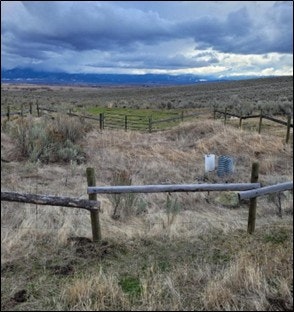
Currently, the only source of water available to livestock at the site is an unnamed irrigation ditch which is fed from Old Settlers Slough and runs through the project location, providing stock water in two separate pastures and five livestock pens, spread across 27 acres total. As this ditch is the sole source of water in the pastures, livestock tend to congregate around it, increasing the amount of sedimentation and erosion along the banks. By installing six off-channel watering locations and 600 feet of HDPE pipe, the landowner will eliminate livestock congregation as well as better utilize grazing rotations.
● Mansfield Irrigation Improvement- Small Grant
At the project site, 33 acres of pasture and hay ground are being flood irrigated via the North Powder River into the Mansfield Ditch. After water is pushed across the field, all tail water, carrying excess sediment and nutrients, flows into Little Muddy Creek, a tributary of the Powder River. Both Little Muddy and the Powder River are listed on Oregon Department of Environmental Quality’s (DEQ) 303 d list for sedimentation, dissolved oxygen, habitat modification and flow modification; all of which can be attributed to runoff entering a freshwater stream. The project will install two half circle pivots (one to serve 21 acres, and the other to serve an additional 12 acres; landowner match) that will tie into an existing mainline, as well as an existing power source. This project will install 3,225 feet of cable in conduit to complete the irrigation system components.
●Sumpter Water Improvement– Large Grant
Located above Phillips Lake Reservoir, the site currently utilizes flood irrigation on 152 acres of pasture ground conveyed through open earthen ditches and diverted out of the Powder River. All irrigation runoff from the site returns to Worley Creek and the Powder River and then flows directly into Phillips Lake Reservoir, located only one mile from the project site. The use of flood irrigation at this particular site is causing the ground to become oversaturated; increasing erosion, sedimentation, and nutrient input concerns in the Powder River, as well as in the reservoir, both of which are listed on Oregon Department of Environmental Quality’s (DEQ) 303(d) list. Because oversaturated soil cannot properly absorb water, this issue is not only contributing to the ongoing runoff concerns, but impacting soil health and biodiversity at the site as well. One ten-tower pivot will be installed, along with flow meter, filtration system, pumping station, 160 feet of 12” mainline, 1,820 feet of cable in conduit, and OTEC power hookup.
●Pocahontas Irrigation Improvement- Large Grant
Located two miles outside of Baker City, the property is flood irrigating 335 acres of pasture ground, via Steele Mill Ditch, through a series of open earthen ditches which are experiencing surface erosion, sedimentation and ditch loss. The large fields are uneven, leaving some areas over-saturated with flood water, and others receiving no water at all. Flood irrigation runoff leaves the uneven pasture ground and travels through a series of connected ditches that return to the Powder River, located only about three miles from the project site. This project proposes to install two 7-tower pivots and one half circle 7-tower pivot to convert 335 acres of pasture to a more efficient sprinkler system. The sprinkler system will be fed by a bulge in the Steele Mill Ditch, complete with two floating pumps and two flow meters to serve the pivots.
●Hibbard Gulch Water Improvement- Small Grant
Located in Baker Valley, this property grazes 50 head of livestock within 60 acres of pasture ground. The livestock are rotated through the pastures from October through March before being moved to another piece of property. Due to the geography of the project site, runoff leaving Pasture A will often travel directly down the roadway and into neighboring private ground, as well as into Farmers Irrigation Ditch.To prevent winter pasture runoff from directly leaving the property and entering Farmers Irrigation Ditch, this project proposes to install one 24” culvert to divert runoff from Pasture A into Pasture B. The landowner has partnered with the Baker Valley SWCD as well as the Baker County Road Department to install the project and mitigate this watershed concern.
MONITORING GRANTS
●Elkhorn Wildlife Improvement- Large Grant
ODF and ODFW partnered with the Baker Valley SWCD to address two concerns. The first concern was the overstocked forest and dense stands of timber found within the EWMA. 400 acres were thinned in Spring 2022 to open the canopy. The second concern was providing protection to the watershed attributed to stream crossings. To address the watershed concerns two temporary bridges were installed, one on Anthony Creek, 50-foot by 13-foot rail car Frame Bridge and one on the Coughenour ditch, 8-foot by 10-foot heavy-duty cattle guard that sat on two concrete abutments while ODF managed the operations during the forest thinning. With the project complete both bridges have been removed and the stream crossings have been restored to post operations. Both temporary bridges are available for private forest operations use and “rented” through ODF.
●Little Creek Stockwater- Large Grant
This project improved water quality and grazing management by installing a solar panel pump to an existing well via 1,210 feet of HDPE pipe to pump the water into the 2500-gallon storage tank which then gravity feeds a 500-gallon rubber tire water trough complete with a wildlife escape ramp. A rubber tire water trough is situated in the newly constructed metal corrals that include access to two different pastures providing a reliable off-channel watering location. The landowner can open gates allowing the livestock access from either the east pasture (150 acres) or the west pasture (470 acres) depending on which pasture is being grazed at the time.
●Washington Spring Development- Small Grant
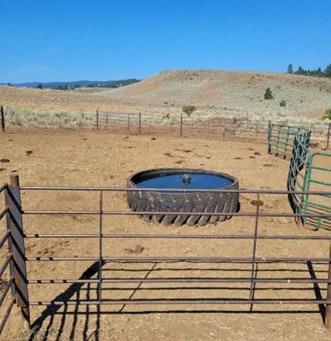
This project has provided a clean, reliable year-round watering source for livestock as well as wildlife in a 154 acre pasture. Project components include: the developed spring with a perforated collector pipe that will provide water to the rubber tire trough; 1,600 feet of 2” HDPE pipe to connect the water trough, which is on a float system, and six yards of gravel spread around the trough to ensure longevity.
●Scarlet Stockwater- Small Grant
Prior to install, the only source of water available to livestock was the Williams Irrigation Ditch and a perennial stream that runs through the landowner’s property, which was experiencing erosion and bank sloughing. The landowner developed a spring, installed a 1,725 gallon cistern, installed 1,550 ft. of HDPE pipe and one off-channel rubber tire livestock water trough to reduce livestock pressure and provide reliable water.
●Witching for Stockwater- Small Grant
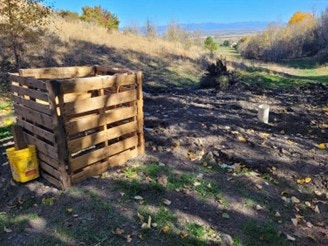
Prior to install, the only available stock water in 158 acres of pasture ground was Baldock Slough, leading to sedimentation and erosion concerns. The project installed two off channel watering locations tied to an existing well; with two eight-foot rubber tire troughs, 1,300 feet of 2” pipe, and a 1.5 HP pump.